
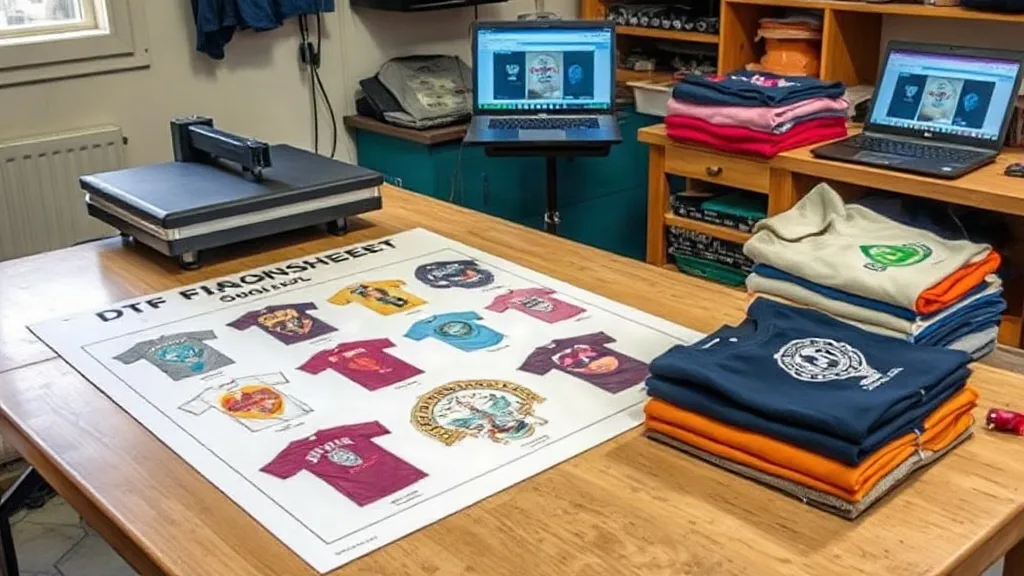
When you run a small apparel business or a busy print shop, every minute and every cent counts. You're constantly looking for ways to produce high-quality custom t-shirts without sacrificing speed or blowing your budget. That's where the DTF Gangsheet comes in. This game-changing approach to direct-to-film (DTF) printing lets you arrange multiple designs on a single sheet, maximizing efficiency and minimizing waste. In this article, we'll dive into what DTF gangsheets are, how they work, and why they might be the missing piece in your production puzzle.
What Is a DTF Gangsheet?
A DTF gangsheet is essentially a large film sheet on which multiple DTF transfers are printed simultaneously. Instead of printing each design individually, you combine several designs (or multiple copies of the same design) onto one sheet, hence the term "gang" (like a gang of designs). This sheet is then powdered with adhesive, cured, and can be stored until you're ready to press. When an order comes in, you simply cut out the needed transfer and apply it to the garment using a heat press.
The beauty of a DTF gangsheet lies in its flexibility. You can mix and match designs of different sizes and colors, as long as they fit within the sheet's dimensions. This is particularly useful for small businesses that offer a variety of designs but don't have the volume to justify printing each one separately. It's also a lifesaver for print-on-demand shops that need to fulfill orders quickly without keeping a large inventory of pre-printed transfers.
Why DTF Gangsheets Are a Game-Changer for Custom Apparel
If you're still on the fence about adopting DTF gangsheets, consider the following benefits that can directly impact your bottom line and customer satisfaction.
Cost Efficiency
Printing supplies aren't cheap, and every square inch of film and ink counts. By grouping multiple designs on one sheet, you drastically reduce waste. You're using the same amount of film and ink as you would for a single large print, but you're getting several transfers out of it. This economy of scale lowers your cost per transfer, allowing you to offer competitive prices or increase your profit margin. Additionally, many DTF suppliers offer gangsheet building services or software that help you optimize the layout, ensuring you get the most out of every sheet.
Time Savings
Time is money, especially in the apparel industry. Traditional DTF printing requires you to set up each design individually, which can be time-consuming for multi-design orders. With a gangsheet, you prepare one file containing all the designs, print it once, and you're done. The cutting and pressing steps are also streamlined because you can cut multiple transfers at once (with a cutting machine) or simply snip them apart as needed. This efficiency means you can take on more orders without hiring extra help or working overtime.
Consistent Quality
When you print designs individually, there's always a risk of slight variations in color or detail from one print to the next. A gangsheet ensures that all designs on that sheet are printed under the same conditions, so you get consistent quality across the board. This is crucial if you're producing team uniforms, event merchandise, or any order where uniformity matters. Your customers will appreciate the professional look, and you'll build a reputation for reliability.
Versatility in Design
DTF printing itself is incredibly versatile—it works on almost any fabric, including cotton, polyester, blends, and even nylon. Gangsheets take that versatility up a notch by allowing you to combine different design styles on one sheet. You can print a mix of full-color graphics, text-based designs, and simple logos all at once. This is perfect for businesses that offer personalized products or for print-on-demand stores that need to cater to diverse customer preferences without stocking separate inventories.
How to Create and Use a DTF Gangsheet
Getting started with DTF gangsheets is straightforward if you follow these steps.
Step 1: Design Your Layout
Use graphic design software like Adobe Illustrator, Photoshop, or a dedicated gangsheet builder tool provided by your DTF supplier. Arrange your designs on a canvas that matches the dimensions of the film sheet you'll be using (common sizes are 13"x19", 22"x24", or 24"x36"). Be mindful of spacing—leave at least 0.25 inches between designs to make cutting easier. Also, consider the grain of the film; some films have a direction, so orient your designs accordingly.
Step 2: Print the Gangsheet
Load your DTF printer with the appropriate film and ink. Print your gangsheet file using your printer's RIP software, which should be calibrated for DTF printing. Ensure that the print is mirrored (unless your workflow requires otherwise) and that the ink density is set correctly for the film you're using. After printing, apply DTF adhesive powder evenly over the wet ink, shake off excess, and cure the sheet according to your powder's instructions (typically using a heat press or oven).
Step 3: Store and Use Transfers
Once cured, your gangsheet is ready to use or store. Cut out individual transfers as needed using scissors or a cutting machine. Store unused transfers in a cool, dry place away from direct sunlight—they can last for months if properly stored. When you're ready to apply a transfer, preheat your heat press to the recommended temperature (usually around 300-320°F), place the transfer on the garment, and press for 10-15 seconds with medium pressure. Peel the film while hot or cold, depending on the film type, and you're done.
Choosing the Right DTF Gangsheet Supplier
Not all DTF gangsheets are created equal. The quality of the film, ink, and powder can significantly affect the durability and vibrancy of your prints. When selecting a supplier, look for those who offer high-quality films that resist curling and cracking, vibrant inks that hold up wash after wash, and reliable adhesive powder that ensures a strong bond. It's also worth considering suppliers who provide gangsheet building software or templates to make the process easier. Reading reviews and requesting samples can save you from costly mistakes down the line.
Common Mistakes to Avoid with DTF Gangsheets
Even seasoned pros can slip up when working with gangsheets. Here are a few pitfalls to watch out for:
- Overcrowding the sheet: Leaving too little space between designs can make cutting difficult and lead to wasted transfers.
- Ignoring film orientation: Some films have a matte and glossy side; printing on the wrong side will ruin the sheet.
- Inconsistent powder application: Too much powder leads to a stiff, plasticky feel; too little results in poor adhesion.
- Improper curing: Under-curing means the transfer won't adhere properly; over-curing can cause the film to warp or the adhesive to lose its tack.
- Storing transfers incorrectly: Exposure to moisture or heat can degrade the adhesive, so always store them in a cool, dry place.
Frequently Asked Questions About DTF Gangsheets
Can I use a DTF gangsheet for small orders?
Absolutely. Gangsheets are ideal for small orders because you can combine multiple designs on one sheet, reducing waste. Even if you only need a few transfers of each design, a gangsheet makes it cost-effective to produce them in one go.
How long can I store a DTF gangsheet before using it?
When stored properly in a cool, dry place away from direct sunlight, DTF transfers can last for several months—typically up to six months or more. Always check with your supplier for specific storage recommendations.
What fabrics work best with DTF gangsheets?
DTF transfers adhere well to a wide range of fabrics, including cotton, polyester, blends, and even nylon. They are particularly popular for heavyweight shirts because the transfers are durable and can withstand the thicker fabric without cracking.
Do I need a special printer for DTF gangsheets?
Yes, you need a DTF printer that uses DTF ink and film. However, many print shops offer gangsheet printing services if you don't want to invest in the equipment yourself.
How do I price products made with DTF gangsheets?
Calculate your cost per transfer by dividing the total cost of the gangsheet (including film, ink, powder, and labor) by the number of transfers on the sheet. Then add your desired profit margin. This ensures you're covering costs and making a profit.
Embracing DTF gangsheets can be a smart move for any apparel business looking to boost efficiency and quality. Whether you're a small startup or an established print shop, this method offers a practical way to handle custom orders with ease. Give it a try and see how it transforms your workflow.