
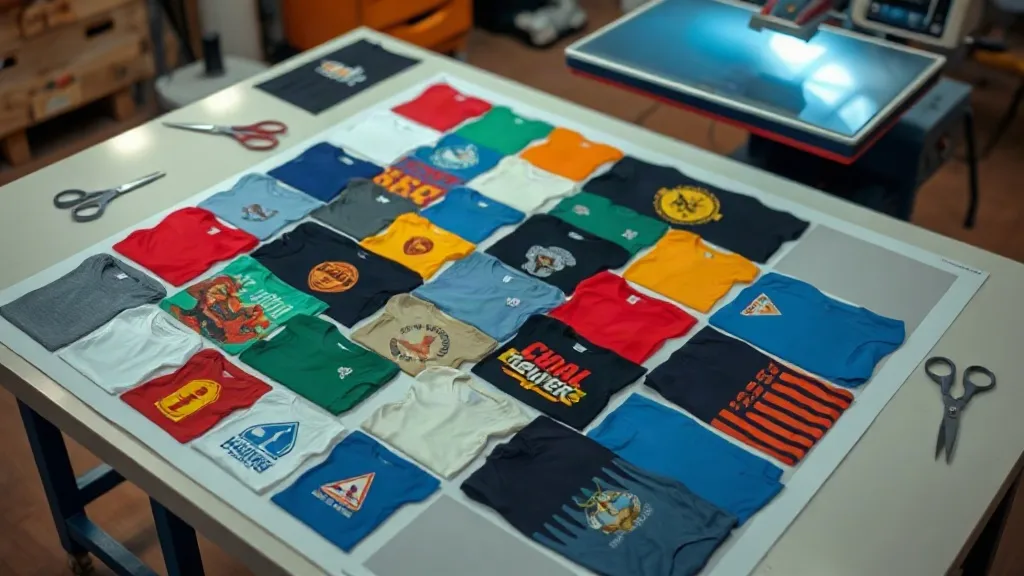
You quoted a custom order for twelve heavyweight tees last week. The customer loved the design, approved the mockup, and paid the deposit. Then you sat down to order transfers and realized the per-unit cost ate most of your margin. If that scenario sounds familiar, the problem is not your pricing skills. It is how you are buying transfers. A DTF Gangsheet changes the math on small-batch apparel, and once you understand how to use one, quoting becomes faster and far less stressful.
What a DTF Gangsheet Actually Is
A gangsheet is a single large transfer sheet that holds multiple designs, sizes, and colorways laid out together. Instead of ordering twelve individual transfers, you order one sheet with all twelve prints nested efficiently. The printer charges you for the sheet, not for each piece, which means the cost per print drops as you fill the available space.
Most gangsheets come in standard roll widths, typically 13, 22, or 24 inches, and you pay by the linear foot or by the sheet. The key is that empty space is wasted money. The more designs you can fit without overlapping or crowding the cut lines, the better your per-unit cost.
Why Small Batches Benefit Most
Large orders spread setup costs across hundreds of units, so the per-print price is already low. Small batches do not have that luxury. A twelve-piece order can carry a surprisingly high per-transfer cost when each design is ordered separately, because you are paying for individual setup and handling. A gangsheet consolidates that setup into one job, which is exactly where small-batch pricing gets rescued.
Think about a typical scenario: a local gym orders ten hoodies with a front logo and a back print. Ordered separately, that is twenty individual transfers. On a gangsheet, those twenty prints fit on a single sheet with room to spare. The difference in cost per hoodie is often enough to turn a thin margin into a healthy one.
How to Price Small-Batch Apparel With a Gangsheet
Pricing is not just about the transfer cost. It is about knowing your true cost per unit so you can quote confidently. Here is a straightforward method that works for shops of any size.
Step 1: Calculate Your Cost Per Print
Start with the total gangsheet cost, including shipping. Then divide that by the number of prints on the sheet. If a 24-inch by 36-inch sheet costs thirty dollars and holds twenty prints, your cost per print is $1.50. That number is your foundation. Everything else builds on it.
Be honest about waste. If you leave a third of the sheet empty, your effective cost per print is higher. Fill the sheet or accept that you are paying for air.
Step 2: Add Blanks, Labor, and Overhead
Transfer cost is only one part of the equation. Add the cost of the blank shirt, the time it takes to press each piece, packaging, and a share of your overhead. A heavyweight tee might cost eight dollars, pressing might take two minutes per shirt at your hourly rate, and packaging adds another dollar. Suddenly your true cost per unit is clearer, and you can set a retail price that protects your margin.
Step 3: Build a Quote That Holds Up
With your cost per unit in hand, you can quote small batches without fear. A common approach is to set a minimum order quantity that covers your time, then price each additional unit at a rate that reflects your gangsheet efficiency. Customers understand that smaller orders cost more per piece, but they appreciate a clear, consistent quote. When you can explain that your pricing is based on a consolidated transfer sheet, it sounds professional rather than arbitrary.
Designing a Gangsheet That Saves You Money
Filling a gangsheet efficiently is a skill. A few habits make a big difference.
- Group designs by size and color to make cutting and pressing easier.
- Nest smaller prints into the gaps around larger ones instead of leaving empty corners.
- Keep a consistent margin between prints so you can cut cleanly without nicking artwork.
- Rotate designs when it helps them fit, but never rotate text or logos that must read a certain way.
- Save your layout as a template so repeat orders take minutes instead of hours.
Many transfer suppliers offer online gangsheet builders that show you the sheet in real time and calculate the price as you add designs. Using one of these tools is often faster than laying out files in design software and guessing whether everything fits.
Common Gangsheet Mistakes That Cost You Money
Even experienced shops lose margin to a few avoidable errors. Watch for these.
Leaving Too Much Empty Space
A half-empty sheet is a half-wasted sheet. If you cannot fill it with a current order, consider adding a few popular designs to your next sheet so you have stock on hand. Just be sure you will actually use them.
Ignoring Cut Lines
Prints that crowd each other force you to cut into the artwork, which leads to wasted transfers and unhappy customers. Always leave a clean border around each design.
Ordering the Wrong Sheet Width
If your press is 16 inches wide, a 24-inch sheet means trimming before pressing. That is fine if you plan for it, but it adds labor. Match your sheet width to your press when possible.
When a Gangsheet Is Not the Right Choice
Gangsheets shine for small and medium batches with multiple designs. They are less useful when you need a single large print that fills most of a sheet, or when you are ordering hundreds of identical transfers where a bulk roll might be more economical. Knowing when to use each option is part of running a smart shop.
For most custom apparel businesses, though, the gangsheet is the default for anything under a few dozen pieces. It keeps costs predictable and quoting simple.
Frequently Asked Questions
How many prints fit on a typical DTF Gangsheet?
It depends on the size of the designs and the sheet dimensions. A 24-inch by 36-inch sheet can hold anywhere from a dozen small chest logos to a few large back prints. Most shops aim for a mix that fills the space without crowding.
Can I mix different shirt sizes on one gangsheet?
Yes. You can place small, medium, and large prints on the same sheet as long as they fit within the layout. Just keep them organized so you can identify each size during pressing.
Is a gangsheet cheaper than ordering individual transfers?
For small batches, almost always. The per-print cost drops because you pay for one sheet instead of many separate setups. For very large runs of a single design, bulk ordering may be more economical.
How do I calculate my cost per print from a gangsheet?
Divide the total sheet cost, including shipping, by the number of usable prints on the sheet. That gives you a baseline cost you can build your retail price around.
Do gangsheets work with heavyweight blanks?
They do. Heavyweight fabrics like those from Heavyweight Shirt Shop press well with DTF transfers, and the gangsheet format simply lets you prepare multiple prints for those blanks in one efficient order.