If you have spent any time around custom apparel, you have probably noticed a shift in the last few years: small studios, school teams, and one-person print shops are all talking about the same thing. The reason is simple. dtf transfers let you print full-color artwork onto almost any fabric without the setup cost or color limits of older methods. But there is a real difference between a transfer that looks sharp on day one and one that still looks sharp after twenty washes. That gap comes down to understanding the material, the press settings, and the fabric you are printing on.
What a DTF transfer actually is
DTF stands for direct-to-film. Instead of printing straight onto a garment, a printer lays your design onto a special film, adds a layer of hot-melt adhesive powder, and cures it. What you get is a flexible, pre-formed sheet of artwork that you store flat and press onto fabric when an order comes in. The dtf process separates printing from pressing, which is why it is so useful for people who sell custom shirts but do not want to own a full print setup.
The film itself is thin and slightly tacky on the adhesive side. When you press it, the powder melts into the fibers of the fabric and the carrier film peels away clean. What stays behind is a print with a soft hand feel, strong stretch recovery, and no white outline problem, which is the classic headache of older transfer papers.
Why DTF has become the default for small-run custom work
Screen printing still wins on large runs of a few colors. Vinyl still wins for simple one-color names and numbers. But DTF sits in a sweet spot that neither of those covers well: full-color artwork, small quantities, and a wide range of fabrics.
No color limits and no setup fees
A screen printer charges you per color per screen. A gradient photo of a sunset becomes expensive fast. With DTF, a twelve-color design and a two-color design cost the same to print. That single fact changes what is possible for a small business, a band selling merch at a show, or a family reunion shirt that only needs thirty pieces.
It works on fabrics that used to be off-limits
Cotton is easy. Polyester blends, nylon, canvas, and even some treated leathers are where DTF earns its keep. If you have ever tried to press a standard transfer onto a 50/50 blend and watched it crack within a week, you know why this matters. The adhesive in a quality DTF sheet bonds to synthetic fibers far more reliably than older plastisol-based transfers.
Storage and fulfillment are simple
Printed transfers keep for months if stored flat, cool, and dry. That means a shop can print a batch of designs, keep them in a drawer, and press them to order. No inventory of blank shirts sitting in every size, no minimum order per design. For anyone selling online, that flexibility is worth more than a slightly lower per-unit cost on a bulk run.
How to apply DTF transfers so they last
Most complaints about peeling or cracking trace back to the press, not the print. The steps are short, but each one matters.
- Pre-press the garment. Ten to fifteen seconds at your press temperature removes moisture and wrinkles. Skipping this is the most common cause of poor adhesion.
- Place the transfer with the adhesive side down. The printed side faces up. Get this wrong and you will fuse the carrier film to your shirt.
- Press with firm, even pressure. Medium to heavy pressure for roughly fifteen to twenty seconds at around 300 to 320 degrees Fahrenheit works for most fabrics. Thicker garments and canvas need the upper end of that range.
- Peel when cool or warm, depending on the film. Follow the supplier's instruction. Cold peel films should be left to cool completely before you remove the carrier.
- Post-press for five to ten seconds. A second short press with a cover sheet locks the print in and smooths the surface.
If you are pressing a stretchy fabric, stretch the garment slightly while it cools. This pre-stresses the print so it does not crack the first time someone pulls the shirt over their head.
Choosing the right blank shirt for DTF
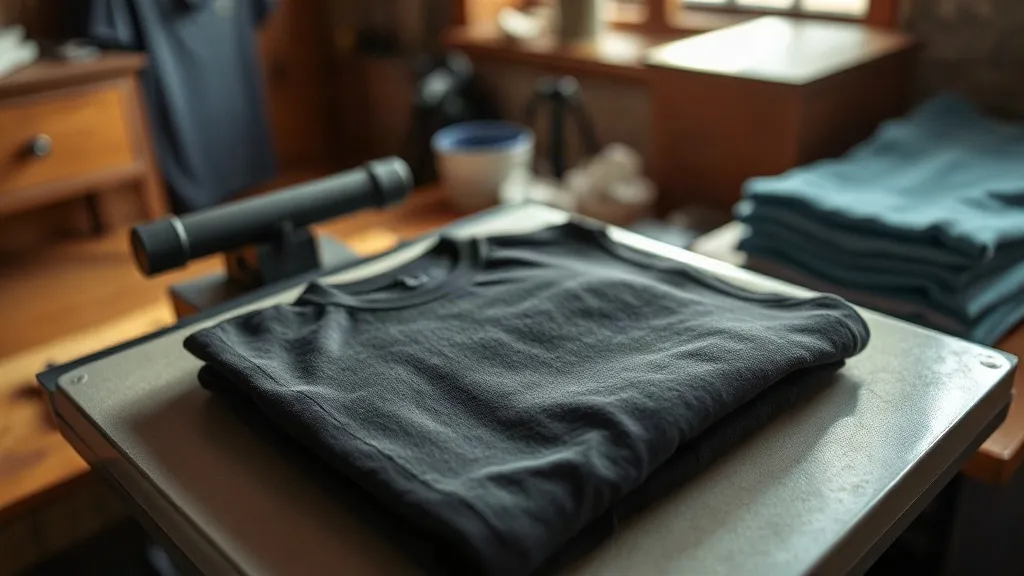
The print is only half the equation. A heavyweight cotton tee with a tight weave gives DTF adhesive more surface to grab, and the heavier fabric holds its shape so the print is not constantly flexing. Lightweight, loosely knit shirts are more likely to show texture through the print and to stretch in ways the adhesive has to absorb.
For polyester and performance fabrics, lower your press temperature slightly and shorten the dwell time. Synthetic fibers can scorch or glaze under too much heat, and a scorch mark will not wash out. Test on a scrap piece or an inside hem before you commit to a full run.
Common mistakes and how to avoid them
- Pressing on a damp shirt. Moisture turns to steam and pushes the adhesive away from the fabric. Always pre-press.
- Using too little pressure. Light pressure leaves the adhesive sitting on top of the fibers instead of bonding into them. Peeling at the edges is the tell.
- Peeling too early or too late. Each film has a window. If you are unsure, test one transfer before running the whole batch.
- Washing inside out with hot water. Turn garments inside out, use cold water, and skip the dryer's high heat. This alone can double the life of a print.
- Ironing directly over the print. If a shirt needs a touch-up, iron from the inside or use a cover cloth.
DTF versus the alternatives, briefly
Screen printing remains the most cost-effective option for large runs of simple designs, and it has a softness that nothing else quite matches. Vinyl is fast for single-color text and numbers. Sublimation only works on light polyester and leaves no hand feel at all, but it cannot print on cotton. DTF is the method that handles full-color art on almost any fabric in small quantities, which is why it has become the go-to for custom shops and small brands. If your order is thirty pieces with a detailed design, DTF is usually the answer. If it is three hundred pieces of a two-color logo on cotton, talk to a screen printer.
Frequently asked questions
How many washes do DTF transfers typically survive?
With correct pressing and cold-water washing inside out, most quality transfers hold up for fifty washes or more. The failure point is usually the press settings or the wash routine, not the film itself.
Can I apply DTF transfers with a home iron?
You can, but results are inconsistent. A home iron does not deliver even pressure across a large area, so edges tend to lift. A small heat press is a far better investment if you plan to do more than a few shirts.
Do DTF transfers work on dark and light shirts equally well?
Yes. Unlike sublimation, DTF prints a white ink layer under the color, so the design shows up correctly on black, navy, and other dark garments without changing the colors.
How should I store unused DTF transfers?
Keep them flat, away from direct sunlight, and in a cool, dry place. Do not fold them, since creases can press into the print. Stored this way, they stay usable for several months.
Is DTF safe for children's clothing?
Reputable suppliers use water-based inks and adhesives that are free of heavy metals and phthalates. Ask your supplier for their compliance documentation if you are producing for children, and always follow the cure and wash instructions.
The short version: DTF rewards good habits. Pre-press the shirt, use firm pressure, peel at the right moment, and wash cold. Do those four things and the print will outlast the trend that inspired it.